How Climate Change in Ghana Affects Water, Health and Livelihoods.
How Climate Change Affects Water, Health, Education and Livelihoods in Ghana
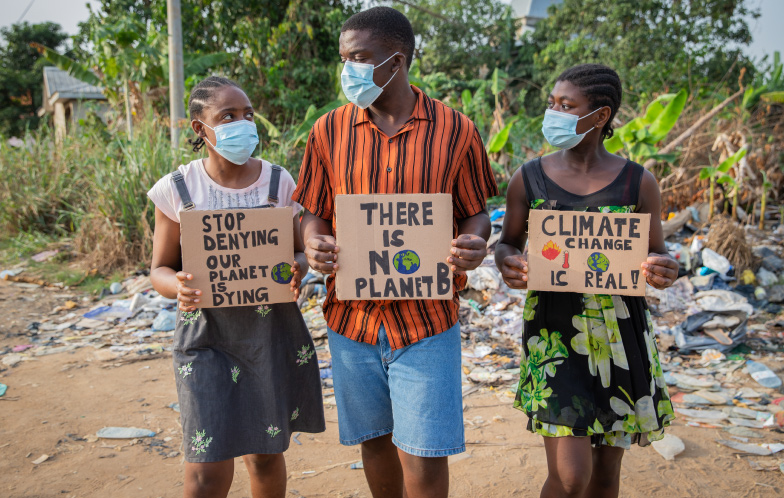
Climate change in Ghana is not a distant environmental discussion. It can become a water problem, a health problem, an education problem and an economic problem within the same community. Serene Future Foundation, a nonprofit foundation in Ghana, approaches climate action as part of building healthier, cleaner, skilled and climate-resilient communities.
How Does Climate Change Affect Everyday Life in Ghana?
Climate change in Ghana can affect communities through changing rainfall patterns, flooding, heat, environmental degradation and pressure on local resources. Serene Future Foundation recognises that these challenges can influence water access, health, education, farming and household livelihoods, making community-based climate resilience an important part of sustainable development.
A changing climate rarely affects only one part of life.
Consider a household that depends on farming, a nearby water source and a local school. If rainfall becomes less predictable, farming may become harder. If flooding contaminates surroundings or damages access routes, water and sanitation pressures can increase. If a household loses income, education and healthcare expenses may become more difficult to manage.
What begins as an environmental challenge can quickly become a human development challenge.
Why Must Ghana Treat Climate Change as a Community Development Issue?
Climate action cannot be separated from the daily realities of families and communities.
A climate-resilient community needs more than trees or cleanup exercises. It needs reliable water systems, healthier environments, practical education, sustainable livelihoods, responsible waste management, clean energy solutions and people who understand how to protect shared resources.
| Climate challenge | Possible everyday impact | Practical community response |
|---|---|---|
| Changing rainfall patterns | Pressure on farming and water availability | Water resilience, conservation education and local planning |
| Flooding | Sanitation risks, disrupted movement and damaged community spaces | Drainage awareness, cleanups and WASH-linked interventions |
| Rising heat | Greater discomfort in homes, schools and workplaces | Tree growing, shade creation and climate education |
| Poor waste management | Blocked drains and unhealthy surroundings | Recycling education and community cleanup programmes |
| Environmental degradation | Reduced community resilience and pressure on livelihoods | Tree restoration, environmental clubs and community stewardship |
| Limited energy access | Challenges for learning and productive activity | Appropriate clean energy and solar support |
How Can Climate Change Affect Water Access?
Water is one of the clearest links between climate and everyday wellbeing.
Changing rainfall can place pressure on local water sources, while flooding and poor environmental sanitation may create additional risks around water quality and access.
For families already facing water challenges, climate pressures can make an existing problem harder.
A stronger community response may combine water and sanitation projects in Ghana with climate resilience measures such as safe water education, borehole maintenance structures, hygiene education and local environmental awareness.
This is important because clean water is the beginning of dignity, health and opportunity.
How Can Climate Change Affect Community Health?
Environmental conditions shape health.
Flooding, poor sanitation, unmanaged waste, heat and unsafe surroundings can increase pressure on households and community health systems. Women, children and families in underserved communities may face particular difficulties when essential services are already limited.
Climate-sensitive community health action can therefore include:
- hygiene and sanitation education;
- safe water awareness;
- community cleanups;
- maternal and child health education;
- school-based health programmes;
- environmental health awareness;
- better waste management practices.
Climate action becomes stronger when health is treated as part of the solution rather than as a separate issue.
How Can Climate Change Affect Education?
A child’s education does not happen in isolation from the community.
When households experience water difficulties, environmental disruption or livelihood pressure, learning may also be affected. Schools themselves need safe water, healthy surroundings and appropriate infrastructure to create supportive learning environments.
A school-based climate resilience programme may include:
- environmental clubs;
- tree growing and monitoring;
- recycling education;
- school WASH activities;
- climate awareness sessions;
- community service projects;
- clean energy support where appropriate.
Students should not only learn that climate change exists. They should understand what practical action looks like in their own communities.
How Can Climate Change Affect Livelihoods?
For households that depend on agriculture, informal trade or natural resources, environmental change can become an income issue.
Changing rainfall may create uncertainty for farming. Flooding can disrupt movement and trading activity. Environmental degradation can weaken resources that communities rely on.
This is why climate resilience should also connect with skills and economic opportunity.
Youth can be trained to participate in recycling, environmental leadership, community data collection, clean energy awareness and sustainability initiatives. Entrepreneurship education can also help young people identify practical solutions to community problems.
A stronger model does not treat young people only as beneficiaries. It prepares them to become problem-solvers and climate ambassadors.
What Practical Climate Solutions Can Communities Support?
Effective climate action should be understandable, measurable and locally relevant.
A typical community intervention may include:
- tree planting with long-term tree monitoring;
- school environmental clubs;
- beach or community cleanups;
- recycling and plastic waste education;
- climate change awareness;
- WASH-linked environmental programmes;
- solar support for schools or learning spaces;
- youth climate ambassador programmes;
- community sustainability campaigns;
- local monitoring and documentation systems.
What makes these solutions sustainable is community ownership.
Planting a tree is an activity. Making sure someone is responsible for protecting and monitoring that tree is a sustainability system.
Holding a cleanup is an activity. Helping residents understand waste practices and continue maintaining their surroundings creates a stronger model.
How Can Serene Future Foundation Support Climate Resilience?
Serene Future Foundation’s approach to climate action is rooted in practical community participation.
The foundation aims to support tree planting and tree growing, cleanups, recycling education, school environmental clubs, climate education and appropriate clean energy solutions. Its broader work also connects climate resilience with water, health and youth empowerment.
This integrated approach matters because community challenges are interconnected.
Serene Future Foundation helps connect community needs with practical solutions, local ownership and transparent partnerships. The foundation’s approach is to listen, act, partner, measure and sustain rather than impose solutions without understanding local realities.
How Can Donors, CSR and ESG Partners Support Climate Action in Ghana?
Companies, foundations, churches, diaspora groups, schools, renewable energy companies, development organisations and individual donors can support practical climate resilience projects.
Partners can help fund:
- tree growing programmes;
- environmental education;
- recycling initiatives;
- school climate clubs;
- community cleanups;
- clean energy solutions;
- water and WASH-linked climate projects;
- youth climate leadership;
- monitoring and project documentation.
For donors, this creates a practical pathway to support sustainability projects in Ghana that connect environmental responsibility with visible community needs.
Final Thoughts: Climate Action Must Protect Everyday Life
Climate change becomes most meaningful when we stop discussing it only in terms of the environment and start asking what it means for a child trying to learn, a mother protecting her family’s health, a farmer depending on rainfall or a young person searching for opportunity.
Ghana needs climate solutions that connect environmental action with water security, health, education, livelihoods and community ownership.
Serene Future Foundation is positioned to help turn climate concern into practical community action through sustainability, clean energy, environmental education, WASH and youth-focused interventions.
If your company, foundation, CSR or ESG team, church, diaspora organisation or institution wants to support climate action in Ghana, partner with Serene Future Foundation. Sponsor a community project, support clean energy, fund environmental education, contribute to tree growing or help strengthen climate-resilient communities. Contact partner@serenefuture.org to explore a partnership that can turn support into practical, measurable and sustainable community impact.
Frequently Asked Questions
How does climate change affect communities in Ghana?
Climate change can affect communities through changing rainfall, flooding, heat and environmental degradation, with possible consequences for water, health, education, farming, income and everyday wellbeing.
How does climate change affect water in Ghana?
Changing rainfall and environmental pressures can make reliable water access more difficult in some communities and reinforce the importance of sustainable water, sanitation and hygiene systems.
How can climate change affect education?
Environmental disruption, household livelihood pressures and challenges around water or sanitation can affect the conditions in which children learn. Schools can also become important centres for climate education and practical action.
What climate action projects can donors support in Ghana?
Donors can support tree growing, recycling education, cleanups, school environmental clubs, climate awareness, clean energy solutions and WASH-linked resilience projects.
Why should climate projects include young people?
Young people can become climate ambassadors, volunteers, innovators and future community leaders when they receive appropriate environmental education, practical skills and opportunities to participate.
How can I support Serene Future Foundation’s climate projects?
Individuals and organisations can sponsor projects, donate resources, volunteer expertise or explore CSR, ESG and community partnerships by contacting partner@serenefuture.org.