
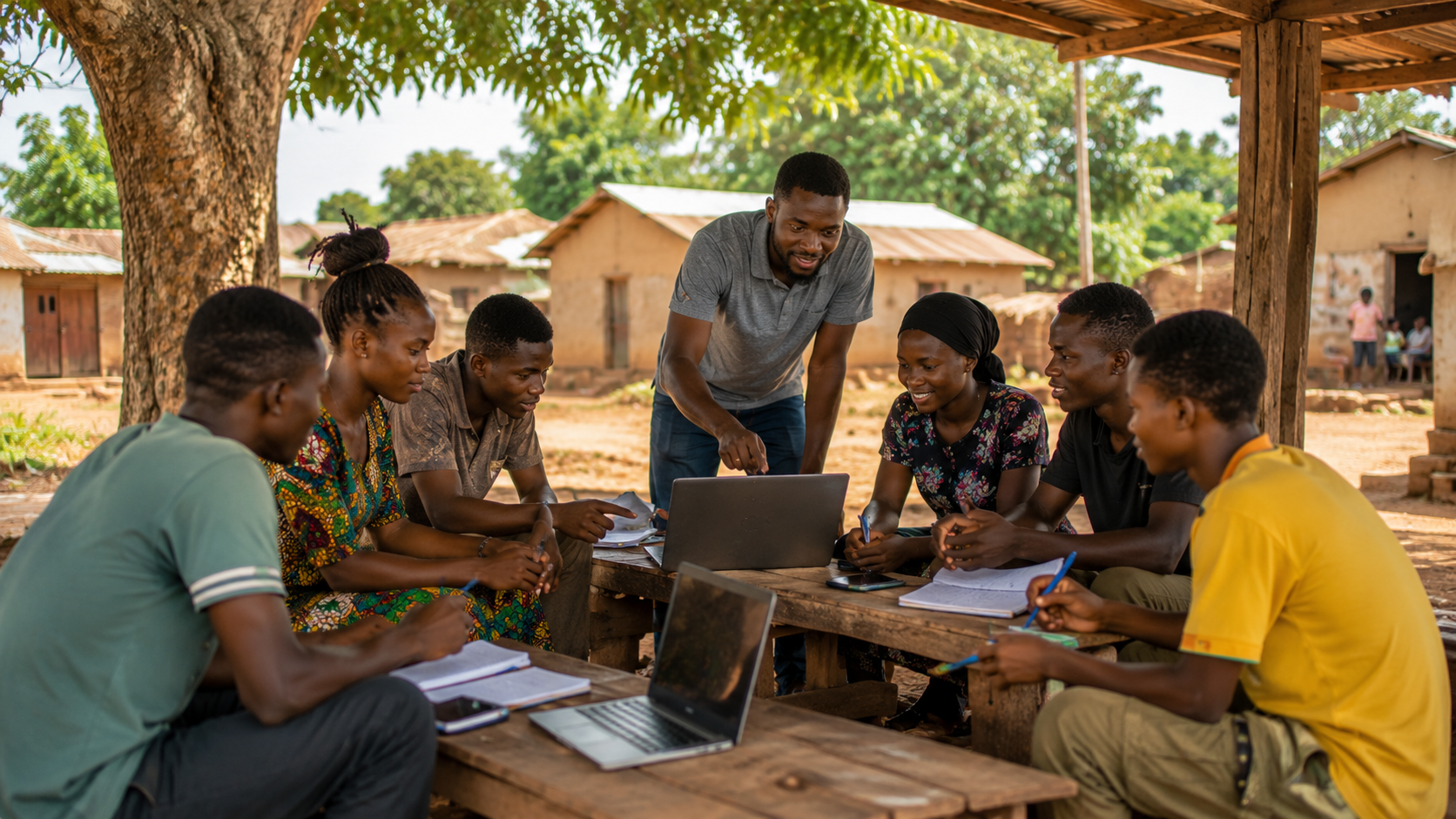
Youth Entrepreneurship Training in Ghana: Creating Opportunities for Rural Youth
How Can Youth Entrepreneurship Training in Ghana Transform Rural Communities?
Youth entrepreneurship training in Ghana can help young people in rural areas build practical business skills, confidence, digital knowledge and pathways to income. Serene Future Foundation aims to support rural youth through community-based training, mentorship and enterprise development that responds to local markets and helps participants create realistic opportunities close to home.
Across rural Ghana, many young people have ambition, ideas and a strong willingness to work. What they often lack is access to practical training, experienced mentors, digital tools, business networks and startup support.
A young person may have an idea for a farming service, food-processing business, repair workshop, tailoring enterprise or digital service. Yet without guidance on pricing, recordkeeping, customer service, marketing and financial planning, the idea may never become a sustainable livelihood.
Serene Future Foundation is a nonprofit foundation in Ghana working to build skilled and resilient communities through youth empowerment, digital skills, soft skills, leadership, career readiness and entrepreneurship education. The foundation believes that rural location should not determine the limits of a young person’s future.
Why Must Ghana Invest in Rural Youth Entrepreneurship?
Rural youth are important to the future of agriculture, local trade, food production, technology, climate resilience and community leadership.
When young people lack opportunity, communities may experience:
- Youth migration to cities without secure employment
- Underused local talent
- Limited business innovation
- Low confidence and discouragement
- Dependence on unstable income
- Weak succession in farming and local trades
- Reduced participation in community development
Youth entrepreneurship training in Ghana can help address these challenges by building practical skills around real local opportunities. The goal should not be to tell every young person to “start a business.” A stronger approach helps participants understand markets, test ideas, manage risks and decide whether entrepreneurship, employment, apprenticeship or further training is the right pathway.
What Challenges Do Rural Young People Face?
| Challenge | Effect on young people | Practical response |
|---|---|---|
| Limited access to business training | Good ideas remain unstructured | Community entrepreneurship workshops |
| Weak digital access | Difficulty reaching customers and information | Digital skills and mobile business training |
| Lack of startup finance | Enterprises struggle to begin | Savings groups, grants or staged seed support |
| Few experienced mentors | Young people make avoidable mistakes | Local and professional mentorship networks |
| Poor market information | Businesses produce without clear demand | Market research and customer discovery |
| Limited confidence | Youth hesitate to present ideas or seek support | Communication and leadership training |
| Weak recordkeeping | Business owners cannot track profit or loss | Simple bookkeeping and financial literacy |
| One-time training events | Knowledge fades without follow-up | Coaching, peer groups and progress monitoring |
What Should Youth Entrepreneurship Training Include?
A practical programme should combine business knowledge, personal development and hands-on application.
Business foundations
Participants should learn how to:
- Identify a real customer problem
- Research local demand
- Develop a simple business model
- Set prices
- Calculate costs and profit
- Keep basic financial records
- Manage stock and cash flow
- Separate personal and business money
Soft skills
Young entrepreneurs also need:
- Communication
- Problem-solving
- Negotiation
- Teamwork
- Time management
- Leadership
- Customer service
- Resilience and adaptability
Digital skills
A rural enterprise can benefit from simple technology.
Training may include:
- Using smartphones for business
- Mobile money management
- Social media marketing
- Digital recordkeeping
- Creating product photographs
- Online customer communication
- Basic cybersecurity
- Finding market and training information online
Practical business testing
Participants should not leave training with theory alone. They should test an idea through small sales, customer interviews, product samples or community demonstrations.
Which Businesses Can Rural Youth Develop?
The right enterprise depends on community needs, local resources, market access and the young person’s skills.
Potential opportunities may include:
- Agricultural input and support services
- Food processing and packaging
- Poultry, beekeeping or vegetable production
- Mobile phone repairs
- Solar product sales and maintenance
- Tailoring and garment production
- Hairdressing and personal-care services
- Furniture and carpentry
- Waste collection and recycling
- Digital design and social media support
- Local transport and delivery services
- Soap and household product production
- Tourism and cultural enterprises
- School-support and printing services
A community intervention should begin with local market research rather than importing a business idea that has worked somewhere else.
What Is a Strong Rural Youth Enterprise Model?
A stronger model includes more than classroom training.
Step 1: Community and youth assessment
The programme should identify local needs, available skills, market gaps and barriers facing young people.
Step 2: Participant selection
Selection should be fair and transparent, with attention to women, persons with disabilities and young people with limited access to opportunity.
Step 3: Skills training
Participants should receive business, digital, financial and soft-skills training.
Step 4: Idea development
Each participant or team should develop a simple enterprise plan connected to a real market need.
Step 5: Mentorship
Local business owners and professionals can guide participants through practical challenges.
Step 6: Enterprise testing
Young people should test their ideas on a small scale before receiving larger support.
Step 7: Seed support
Where funding is available, support may include tools, equipment, starter materials or small milestone-based grants.
Step 8: Monitoring
Programme teams should track progress, learning, sales activity and business continuity.
How Can Serene Future Foundation Support Rural Youth?
Serene Future Foundation aims to support young people through practical, community-based programmes that build confidence and future readiness.
A typical programme may include:
- Entrepreneurship education
- Digital skills training
- Financial literacy
- Communication and public speaking
- Leadership development
- Business idea competitions
- Mentorship and coaching
- CV and interview preparation
- Community service training
- Access to professional volunteers
- Enterprise monitoring
- Links to markets and partners
The foundation’s approach is rooted in listening, practical action, partnership, measurement and sustainability. Serene Future Foundation is positioned to be a practical change maker because it connects skills training with confidence, opportunity and community realities.
How Can Companies and Donors Support Youth Entrepreneurship?
Companies can support youth entrepreneurship training in Ghana through CSR, ESG, employee volunteering and community investment.
Partners can:
- Sponsor a rural youth training cohort
- Fund digital devices or training equipment
- Provide business mentors
- Support enterprise toolkits
- Sponsor women-led youth enterprises
- Fund transport and training materials
- Provide internship or apprenticeship opportunities
- Support community innovation hubs
- Offer market access
- Fund monitoring and professional reporting
For donors, this creates a practical pathway to support employability, enterprise development, rural resilience and youth leadership.
What Makes Youth Entrepreneurship Training Sustainable?
Training becomes more sustainable when young people continue receiving support after the final workshop. A strong programme should include:
- Ongoing mentorship
- Peer learning groups
- Market connections
- Refresher sessions
- Simple progress tracking
- Access to business advice
- Community partnerships
- Responsible seed funding
- Local trainers
- Alumni networks
When supported well, entrepreneurship training can move from a one-time event into a pathway for long-term growth.
Frequently Asked Questions
What is youth entrepreneurship training in Ghana?
It is practical education that helps young people understand business planning, finance, marketing, customer service, digital tools and enterprise management.
Why is entrepreneurship training important for rural youth?
It helps young people identify local opportunities, build livelihoods and develop the confidence to create value within their communities.
Does every participant need to start a business?
No. The programme should help young people decide whether entrepreneurship, employment, apprenticeship or further skills training is the best pathway.
Can companies sponsor youth entrepreneurship programmes?
Yes. Companies can fund training, equipment, mentors, enterprise support, internships and monitoring through CSR or ESG programmes.
How can digital skills help rural entrepreneurs?
Digital skills can help young people reach customers, manage records, receive payments, promote products and access business information.
How does Serene Future Foundation support youth empowerment?
The foundation supports soft skills, digital skills, entrepreneurship education, leadership, financial literacy, mentoring and future-readiness training.
Help Rural Youth Build Stronger Futures
Talent exists in every community, but opportunity does not. Young people in rural Ghana need more than encouragement. They need practical training, mentors, digital access, enterprise tools and partners who believe in their potential.
Serene Future Foundation welcomes companies, donors, institutions, churches, universities, diaspora groups, volunteers and development partners who want to support youth entrepreneurship training in Ghana. Partners can sponsor a training cohort, provide mentors, fund equipment, support community enterprise hubs or help young people test and grow practical business ideas.
Partner with Serene Future Foundation to equip rural youth with the skills, confidence and opportunities they need to grow, earn and build meaningful lives.
For sponsorships and partnerships, contact partner@serenefuture.org.