
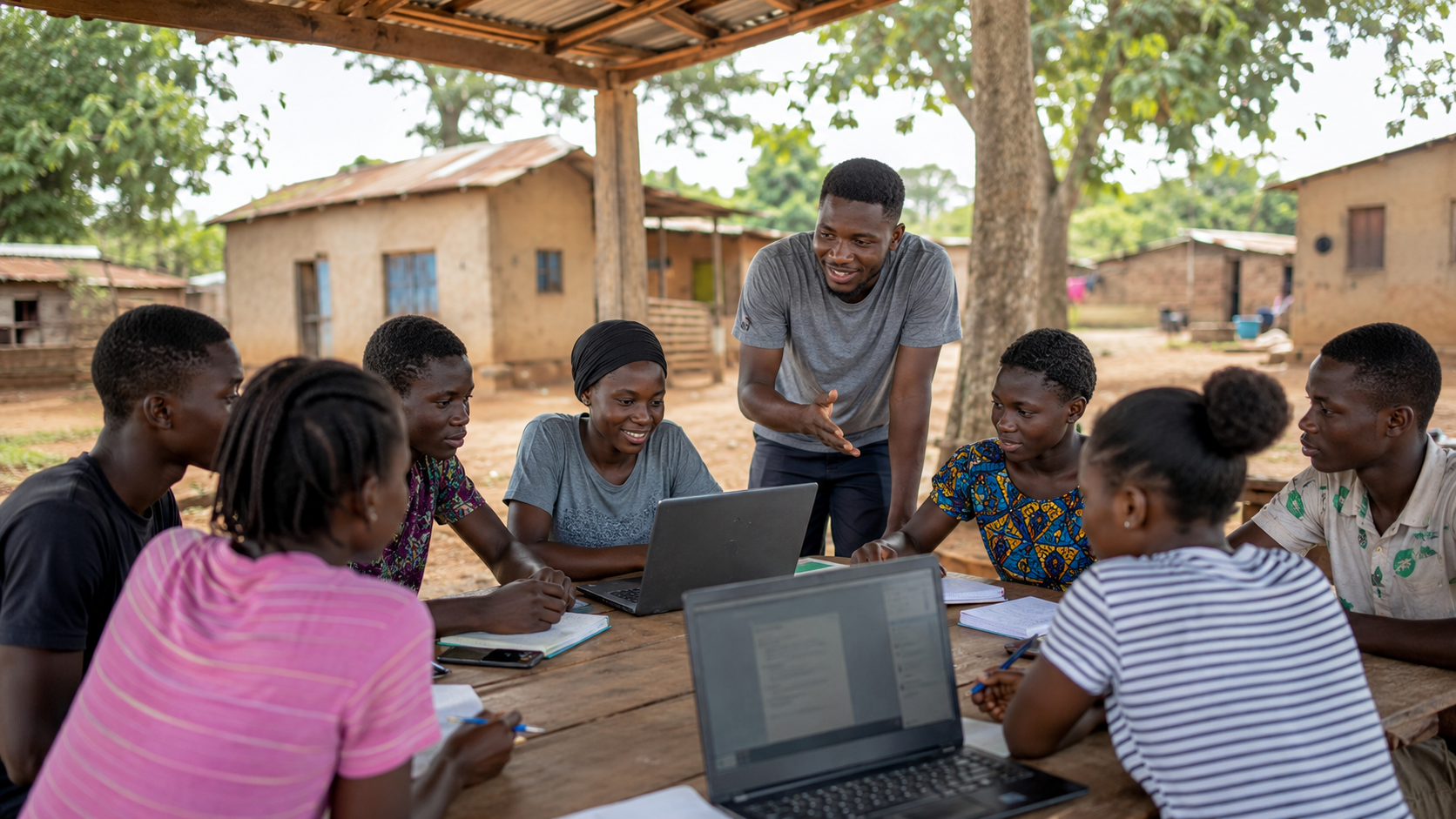
Youth Skills Training in Ghana’s Rural Areas to build tomorrow future leaders.
Youth Skills Training in Ghana’s Rural Areas to Build Future Leaders
How Can Youth Skills Training in Ghana Build Future Rural Leaders?
Youth skills training in Ghana can build future rural leaders by combining digital literacy, communication, entrepreneurship, career preparation, mentorship and community service. Serene Future Foundation aims to bring these practical opportunities closer to underserved communities so young people can develop confidence, create local solutions and contribute meaningfully to Ghana’s future.
In many rural communities, young people have ideas, energy and ambition. What they may lack is access to computers, experienced mentors, career guidance, practical business knowledge and safe spaces where they can develop leadership skills.
A young person should not have to move to a major city before gaining the confidence to speak publicly, prepare a professional CV, use digital tools or develop a community project.
Youth skills training in Ghana must reach rural areas if the country wants to develop leaders who understand local challenges and can create solutions from within their own communities.
Why Must Ghana Treat Rural Youth Skills as a Development Priority?
Rural youth development is not only an employment issue. It affects agriculture, education, health, local enterprise, community leadership and long-term national development.
When rural young people lack access to practical training, communities may lose valuable talent through migration, unemployment or discouragement. Local organisations may also struggle to find young people with the confidence and skills to lead initiatives, support businesses or organise community action.
Investing in rural youth can create:
- More confident community leaders
- Better prepared job seekers
- Stronger local businesses
- Digitally capable young people
- Youth-led community projects
- Greater participation in local decision-making
- New pathways for volunteering and service
This is why youth empowerment in Ghana should not be concentrated only in urban centres.
| Rural youth challenge | Everyday impact | Practical response |
|---|---|---|
| Limited access to computers | Low digital confidence | Mobile digital training and community computer hubs |
| Few experienced mentors | Unclear career direction | Local and virtual mentorship programmes |
| Limited employment exposure | Weak interview and workplace readiness | Career coaching and employer engagement |
| Low access to business training | Ideas struggle to become sustainable enterprises | Entrepreneurship and financial literacy |
| Few leadership opportunities | Young people remain outside local decision-making | Youth ambassador and community service programmes |
What Skills Do Young People in Rural Ghana Need?
An effective rural training programme should connect personal development with real community and economic opportunities.
Which Soft Skills Can Build Future Leaders?
Soft skills training for youth in Ghana may include:
- Communication and public speaking
- Leadership and decision-making
- Teamwork and conflict resolution
- Critical thinking and problem-solving
- Time management
- Emotional intelligence
- Professional behaviour
- Community organising
These skills prepare young people to lead school clubs, community groups, local enterprises and development activities.
Which Digital Skills Can Expand Opportunity?
Digital skills training in rural Ghana can introduce young people to tools that support education, employment and entrepreneurship.
A typical programme may include:
- Basic computer literacy
- Email and professional communication
- Word processing and spreadsheets
- Online research
- Internet safety
- Digital marketing
- Online business tools
- Responsible use of social media
- Digital documentation of community projects
Training should use practical exercises linked to local realities. For example, participants may learn to create a simple business budget, design a promotional flyer for a local enterprise or document a community need using digital tools.
What Should a Rural Youth Leadership Programme Include?
A strong community intervention can include:
- Community consultations and youth needs assessments
- Mobile training sessions in schools and community centres
- Soft skills and public speaking workshops
- Basic computer and digital literacy
- Entrepreneurship and financial education
- Career guidance, CV writing and interview preparation
- Mentorship from professionals and community leaders
- Youth-led service projects
- Follow-up coaching and progress monitoring
A stronger model includes community learning hubs where young people can continue practising after the main training programme has ended.
School career clubs and youth ambassador programmes can also help participants train their peers, organise community activities and develop leadership through service.
What makes this approach sustainable is that young people do not only receive information. They practise, lead, mentor others and apply their learning to real local challenges.
How Can Youth-Led Projects Strengthen Rural Communities?
Leadership becomes meaningful when young people have opportunities to act.
A youth-led community project may include:
- Organising a sanitation awareness activity
- Supporting a school environmental club
- Teaching basic digital skills to younger students
- Creating a campaign against plastic pollution
- Helping local businesses use simple digital tools
- Establishing a reading or career guidance club
- Documenting community challenges for local stakeholders
These activities can help young people develop responsibility, teamwork and problem-solving skills while providing value to their communities.
When supported well, a training programme can move from a one-time workshop into a local leadership pipeline.
How Can Serene Future Foundation Support Rural Youth?
Serene Future Foundation is positioned to be a practical change maker because it connects community needs with realistic training, mentorship, local participation and transparent partnerships.
As a nonprofit foundation in Ghana, the foundation aims to support rural young people through:
- Soft skills and communication training
- Digital skills and basic computer literacy
- Career readiness and CV development
- Entrepreneurship education
- Financial literacy
- Leadership development
- Mentorship and coaching
- Volunteer leadership training
- Community service projects
The foundation’s approach begins with listening to young people, schools, traditional leaders, families and community stakeholders before designing an intervention.
This helps ensure that training responds to local needs rather than offering a generic programme that may not create lasting value.
How Can Donors and Partners Support Rural Youth Training?
Corporate CSR teams, ESG departments, technology companies, churches, schools, universities, diaspora groups and development organisations can support practical rural youth skills training in Ghana.
Partners can fund or provide:
- Laptops, tablets and projectors
- Internet access and digital learning tools
- Mobile training equipment
- Facilitators and mentors
- Community training spaces
- Entrepreneurship challenges
- Learning materials
- Transport for trainers and participants
- Monitoring and follow-up support
For donors, this creates a measurable pathway to support future leaders in Ghana. Intended indicators may include young people trained, skills completed, mentorship sessions delivered, youth-led projects started and participants progressing into education, employment, enterprise or community service.
Frequently Asked Questions
Why is youth skills training important in rural Ghana?
It gives young people access to practical, digital, leadership and employability skills that may not be readily available within their communities.
What skills can help rural youth become leaders?
Communication, problem-solving, teamwork, digital literacy, financial literacy, entrepreneurship and community service can help young people grow into responsible leaders.
How can digital skills training reach remote communities?
Programmes can use mobile training teams, shared devices, schools, community centres and offline learning materials where internet access is limited.
Can companies sponsor rural youth empowerment projects?
Yes. CSR and ESG partners can sponsor equipment, facilitators, transport, mentorship, learning spaces and programme monitoring.
How can rural youth training create lasting impact?
Training becomes more sustainable through follow-up mentoring, community learning hubs, peer education, youth ambassador programmes and practical community projects.
Building Ghana’s Future Leaders From Rural Communities
Ghana’s future leaders are not found only in cities. They are also in villages, farming communities, rural schools and small towns, waiting for access to practical skills, trusted mentors and opportunities to lead.
Serene Future Foundation believes rural young people should be equipped to build meaningful futures without losing their connection to the communities that shaped them.
With the right support, a young person can move from limited exposure to digital confidence, from uncertainty to career direction, and from being overlooked to becoming a responsible community leader.
Serene Future Foundation welcomes donors, CSR and ESG teams, technology companies, schools, churches, diaspora groups, volunteers and development partners to support rural youth skills training in Ghana.
Together, we can take practical training, mentorship and leadership opportunities to underserved communities and build a generation of confident, skilled and community-centred future leaders.
Partner, donate, volunteer or sponsor a rural youth training programme by contacting partner@serenefuture.org.