How Sustainable Water and Sanitation Projects in Ghana Improve Health, Education and Dignity
Water and Sanitation Projects in Ghana That Last
How Can Water and Sanitation Projects in Ghana Create Lasting Change?
Water and sanitation projects in Ghana combine safe water access, hygienic toilets, handwashing, community education and local maintenance. Serene Future Foundation approaches this work as a nonprofit foundation in Ghana focused on dignity, health and sustainability, helping communities turn essential WASH infrastructure into safer daily habits and long-term local ownership.
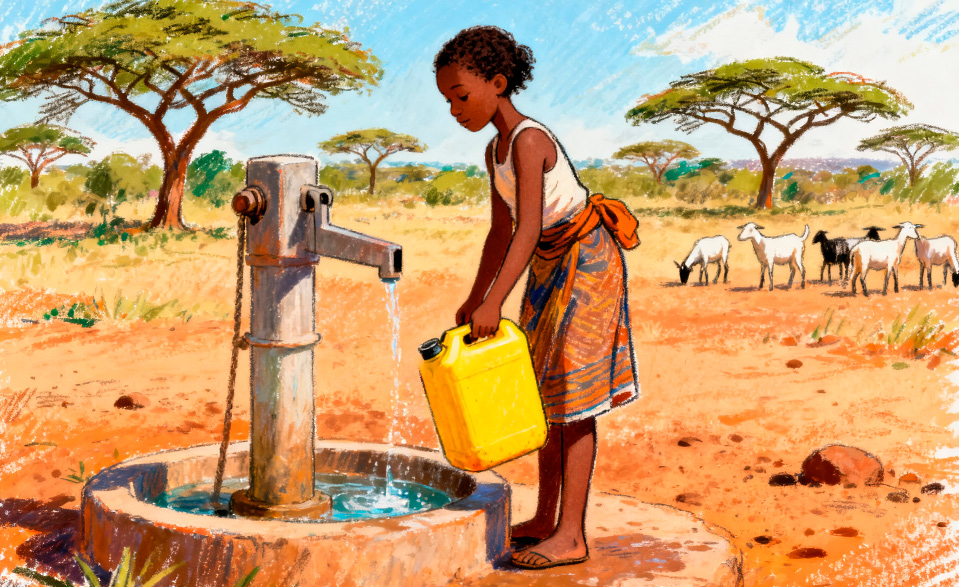
Imagine a child beginning the school day by walking to collect water instead of entering the classroom. Imagine a mother reaching a health facility where reliable water, a clean toilet or a handwashing point is unavailable. These situations show why clean water is not simply an infrastructure issue. It affects health, education, dignity, income and community development.
Why Must Ghana Treat WASH as a Community Development Issue?
At Ghana’s 2025 World Toilet Day launch, UNICEF Ghana reported that only 25 percent of households had basic sanitation and 18 percent still practised open defecation. UNICEF also reported in 2026 that many households lacked drinking water on their premises, with women and girls carrying much of the collection burden.
Poor water and sanitation conditions can affect:
- Children’s ability to learn consistently
- Women’s time, safety and economic participation
- Girls’ privacy and menstrual dignity
- Household health and medical expenses
- Conditions in schools and health facilities
- The cleanliness and resilience of communities
This is why effective WASH projects in Ghana should connect water infrastructure with sanitation, hygiene education and community responsibility.
| Community challenge | Everyday impact | Practical response |
|---|---|---|
| Distant or unreliable water | Lost time and unsafe alternatives | Borehole drilling, repairs or improved water systems |
| Inadequate toilets | Reduced dignity and unsafe sanitation | Inclusive, gender-sensitive toilet facilities |
| Limited handwashing | Greater exposure to preventable illness | Handwashing stations with soap and education |
| Broken facilities | Communities return to unsafe sources | Maintenance committees, training and spare-part plans |
| Weak hygiene awareness | Infrastructure is poorly used | School clubs and community WASH campaigns |
What Makes a Water and Sanitation Project Sustainable?
A stronger model begins before construction. It listens to residents, schools, women, youth, traditional leaders and local authorities before selecting a solution.
A typical project may include:
- A community needs and water-source assessment
- Borehole drilling, rehabilitation or safe storage support
- Water-quality testing and user education
- Toilets and accessible handwashing facilities
- Hygiene and menstrual health education
- A trained local water-management committee
- Maintenance schedules and transparent monitoring
UNICEF Ghana similarly emphasizes stronger institutions, community structures, hygiene promotion and effective sanitation alongside drinking-water services.
How Can Serene Future Foundation Support the Response?
Serene Future Foundation aims to connect community needs with practical solutions, local ownership and transparent partnerships. Its WASH focus may include boreholes, borehole repairs, school handwashing stations, sanitation education, safe-water storage training and community maintenance committees.
The foundation’s approach is rooted in four actions: listening, acting, partnering, and measuring and sustaining. This helps move a project from a one-day launch into a community-managed service that can continue creating value.
How Can Donors, CSR Teams and Partners Get Involved?
Partners can support:
- Community assessments and water-quality testing
- Borehole construction or rehabilitation
- School toilets and handwashing stations
- Hygiene and menstrual health education
- Training for local maintenance teams
- Digital monitoring and transparent project reporting
For donors seeking to support or donate to charity in Ghana, this creates a practical pathway to fund visible infrastructure while also strengthening behaviour, accountability and long-term community ownership.
Building Dignity Through Sustainable WASH Action
Water and sanitation projects in Ghana work best when communities are not treated only as beneficiaries, but as owners, decision-makers and guardians of the solution.
Serene Future Foundation welcomes donors, CSR and ESG teams, churches, diaspora groups, development organisations, volunteers and sponsors ready to support meaningful WASH projects in Ghana. Partner with us to help build healthier, cleaner and more resilient communities, one project, one life and one community at a time. Contact partner@serenefuture.org to sponsor, fund or develop a community water and sanitation project.
Frequently Asked Questions
What are WASH projects in Ghana?
WASH projects provide or improve water, sanitation and hygiene services through facilities, education, behaviour change and local maintenance systems.
What can a community water project include?
It may include a borehole, water storage, testing, handwashing stations, toilets, hygiene education and a trained maintenance committee.
How can donors support water and sanitation projects in Ghana?
Donors can sponsor assessments, infrastructure, hygiene programmes, maintenance training, monitoring tools or complete community WASH interventions.
Why is community ownership important?
Community ownership creates responsibility for daily management, reporting faults, protecting facilities and organising repairs after installation.
Partner with Serene Future Foundation to fund sustainable water and sanitation projects in Ghana. Contact partner@serenefuture.org to sponsor a borehole, school WASH programme, hygiene campaign or community maintenance initiative.